Mint Error Kennedy Half Dollar: In the world of coin collecting, few things spark excitement quite like discovering a mint error. These rare occurrences can transform ordinary coins into extraordinary collectibles, sometimes worth a small fortune. One such example is the 1964 Kennedy Half Dollar, which, due to a mint error, could potentially be valued as high as $770,000. This possibility has intrigued numismatists and casual collectors alike, especially considering the Kennedy Half Dollar’s rich history and cultural significance. With millions of these coins in circulation, the potential for finding a valuable error piece in your spare change may be more realistic than you think. Let’s dive into what makes these coins so special and why even the smallest error can lead to a monumental discovery.
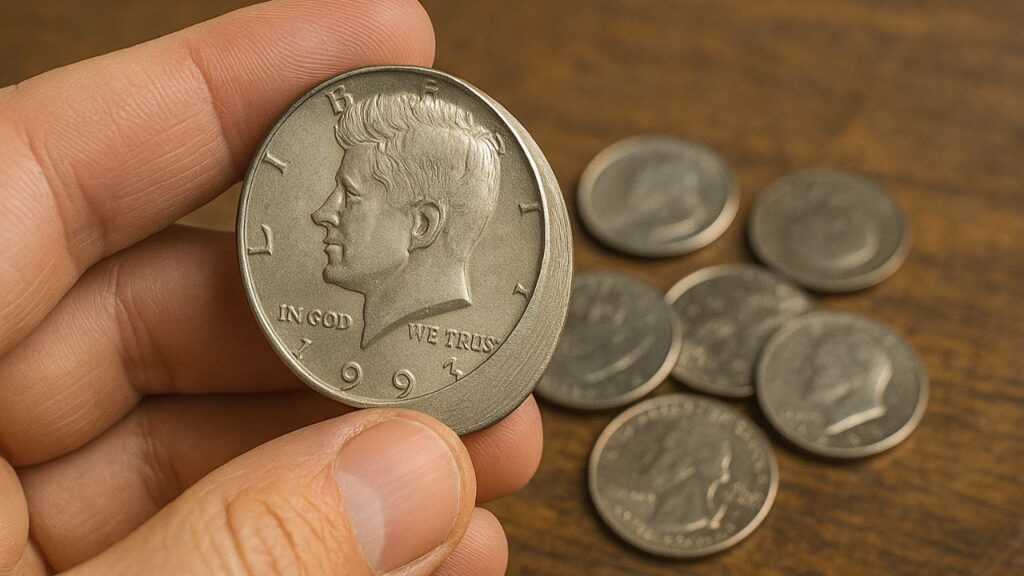
Discovering a Rare Kennedy Half Dollar Mint Error
The allure of the Kennedy Half Dollar goes beyond its standard design. Mint errors, which can include off-center strikes, double strikes, or planchet errors, are highly sought after by collectors. The 1964 Kennedy Half Dollar is particularly notable due to its historical context; it was the first year of issue, following the assassination of President John F. Kennedy. This coin was minted in both 90% silver and in clad compositions in subsequent years. However, the valuable mint errors typically occur in the earlier, silver versions. A prime example of a significant error is the double die obverse, where the coin’s front features doubled images due to a misalignment in the minting process. Such errors can dramatically increase a coin’s value from its face denomination to thousands of dollars, thus becoming a treasure trove for collectors. While finding one in circulation today may be rare, it is not impossible, and knowing what to look for is key.
The Market Value for Kennedy Half Dollar Errors
When it comes to the market value of mint error coins, the Kennedy Half Dollar leads the pack with some of the most sought-after specimens reaching staggering amounts. The record-setting $770,000 Kennedy Half Dollar mint error is a testament to the high stakes in the numismatic world. The value of these coins depends on several factors, including the type of error, the coin’s condition, and its historical significance. Coins that possess unique errors such as the 1964 double die obverse or those that have been preserved in pristine condition can fetch top dollar at auctions. For instance, an auction highlighted a 1964 Kennedy Half Dollar with a mint error sold for over $50,000 due to its rarity and excellent condition. This demonstrates that mint errors are not just anomalies; they are coveted artifacts that provide a glimpse into the coin production process and its occasional imperfections.
Examining Your Coins for Potential Mint Errors
For those interested in the thrill of the hunt, examining your spare change for potential mint error coins can be both exciting and rewarding. A careful and systematic approach is essential when searching for these valuable coins. Begin by familiarizing yourself with what constitutes a mint error. This can include visible anomalies such as off-center strikes, doubled images, or unusual textures on the coin’s surface. Magnification tools, like a jeweler’s loupe, can be incredibly helpful in spotting these small details that might not be visible to the naked eye. Additionally, maintaining a detailed log of the coins you examine can help keep track of any promising finds that warrant further evaluation. While the chances of finding a $770,000 mint error in everyday circulation are slim, many collectors have stumbled upon smaller yet still valuable errors, turning a hobby into a profitable endeavor.
Real-Life Example of a Kennedy Half Dollar Discovery
Real-life stories of incredible finds fuel the passion of many coin collectors. Take the case of Mark, a hobbyist from Ohio, who discovered a 1964 Kennedy Half Dollar with a significant mint error in an old collection handed down from his grandfather. Initially overlooked, the coin was later identified by a local coin dealer as having a rare doubled die obverse error. Mark’s find led to a professional appraisal, and eventually, the coin sold for a remarkable $20,000 at auction. Stories like Mark’s underscore the potential hidden within ordinary collections and demonstrate the importance of thorough examination and expert evaluation. They serve as a reminder that treasures may indeed be lurking in the most unexpected places, waiting to be discovered by those with a keen eye and a bit of luck.