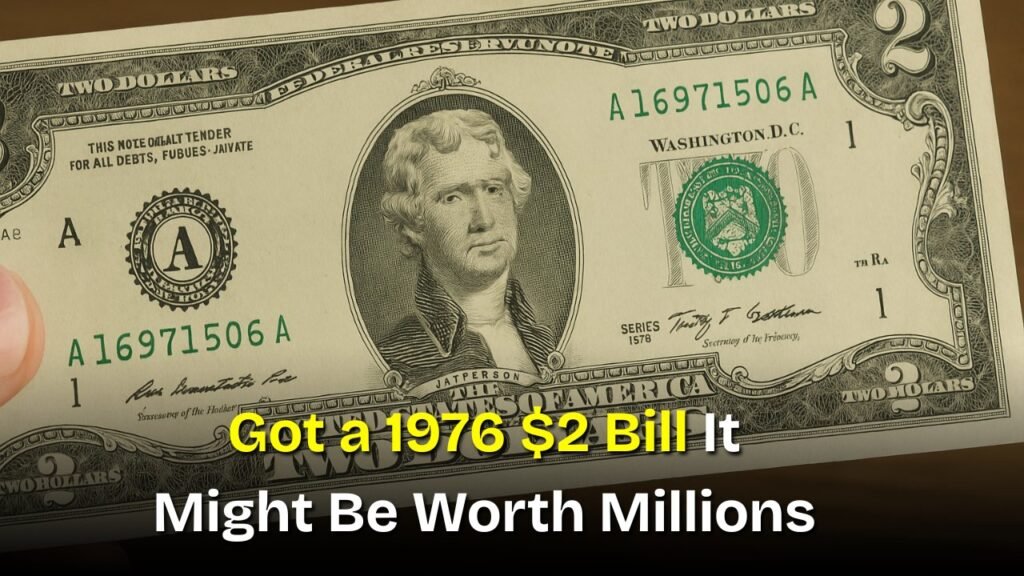
1976 $2 Bill Value: Ever wondered if the 1976 $2 bill tucked away in your drawer could be worth more than its face value? While many of us view these rare bills as mere curiosity, some could potentially be worth a startling amount. The 1976 $2 bill, part of a historic reissue by the U.S. Treasury, has caught the eye of collectors and enthusiasts alike. These notes, featuring Thomas Jefferson on the front and the signing of the Declaration of Independence on the back, were initially met with skepticism but have since gained a unique place in numismatic circles. Whether you’re a seasoned collector or just a curious holder, understanding what makes some of these bills worth more can be an exciting journey.
Understanding the 1976 $2 Bill Collectibility
The allure of the 1976 $2 bill lies in its intriguing history and the rarity of certain prints. When the U.S. Treasury reintroduced the $2 bill in 1976 to commemorate the United States Bicentennial, it marked a significant return of a denomination that had been out of production since 1966. This reissue featured a fresh design, making it distinct from previous iterations. However, not all 1976 $2 bills are created equal. Bills in pristine condition, particularly those with unique serial numbers or errors, can significantly increase in value. Collectors are especially keen on bills with low serial numbers or those that feature a unique sequence. These variations can elevate a standard bill’s worth from a couple of dollars to potentially hundreds, if not thousands. Moreover, the star note—a replacement note indicated by a star symbol in the serial number—adds another layer of collectibility. Such nuances make the 1976 $2 bill a fascinating piece for both amateur and seasoned collectors to explore.
Spotting the Rare Million-Dollar Gem
While the idea of a million-dollar 1976 $2 bill might seem like a dream, certain factors could make it a reality. The most valuable bills are often those that boast rare errors or exceptionally low serial numbers. Error notes, such as those with misprints or unusual ink splotches, can fetch a premium. A real-life example involves a 1976 $2 bill with a significant printing error that sold for over $20,000 at auction. Additionally, bills with unique serial numbers, such as those with repeating digits or palindromic sequences, are highly sought after. Collectors are willing to pay a hefty price for these rarities, making them a potential treasure trove for those lucky enough to possess them. Therefore, it pays to thoroughly examine your $2 bills for these peculiarities, as they could be hiding in plain sight.
The Role of Condition and Rarity
The condition of your 1976 $2 bill plays a crucial role in determining its value. A bill in mint condition—crisp, uncirculated, and free from any folds or marks—is naturally more desirable than one that’s been heavily handled. In numismatics, the term ‘uncirculated’ refers to a note that shows no evidence of wear and tear. Such bills are often stored carefully from the moment they are printed, ensuring they remain in pristine condition. However, even circulated bills can be valuable if they possess unique features, such as star notes or rare serial numbers. The combination of rarity and condition creates a potent mix that drives up the value of these historic notes. So, when examining your collection, pay close attention to both the physical state and the serial number details for a comprehensive evaluation.
Exploring the Market for 1976 $2 Bills
For those interested in selling or buying 1976 $2 bills, understanding the market dynamics is essential. The numismatic market is rife with opportunities for both buyers and sellers, with auctions and private sales providing platforms for transactions. Websites specializing in coin and banknote auctions often have sections dedicated to rare currency, where collectors can bid on unique pieces. Additionally, online marketplaces and numismatic conventions offer avenues to explore the value of these bills further. Sellers should ensure they have their bills appraised by a reputable expert to get an accurate valuation. Meanwhile, buyers should educate themselves on what constitutes a good investment, looking for bills that exhibit the rare features mentioned earlier. Engaging with collectors’ forums and attending coin shows can also provide insights into market trends and help in making informed decisions. As the fascination with historical currency grows, the market for 1976 $2 bills remains vibrant and full of potential.