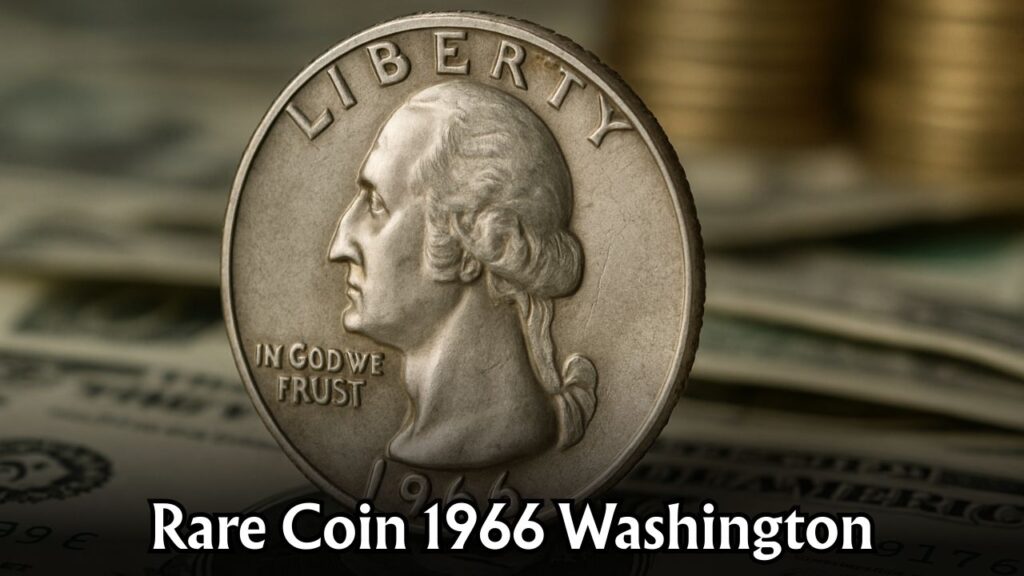
1966 Washington Quarter Value: In the world of numismatics, the allure of rare coins can lead to staggering valuations, and the 1966 Washington Quarter is no exception. This seemingly ordinary coin has captured the attention of collectors and enthusiasts, with some speculating its worth to be as high as $20 million. Often overlooked in pocket change, the 1966 Washington Quarter is a fascinating example of how rarity, historical context, and collector demand can drive a coin’s market value to extraordinary heights. But what makes this particular quarter so special, and why is it causing such a buzz among collectors? Let’s delve into the intriguing details that have led to its potential multimillion-dollar valuation.
Understanding the History Behind the 1966 Washington Quarter
The 1966 Washington Quarter holds a unique place in American coin history, primarily due to the significant changes occurring in the U.S. Mint during that time. In the mid-1960s, the U.S. faced a coin shortage that resulted in the minting of coins without mint marks between 1965 and 1967. This period was marked by the transition from silver to a copper-nickel clad composition, making the 1966 quarter one of the first of its kind. The absence of a mint mark during this period adds an element of mystery and rarity to the coin, making it particularly appealing to collectors. Additionally, the quarter’s historical context, being minted during a time of economic and political change, enhances its allure. While it may seem like a common coin at first glance, understanding its historical significance and the nuances of its production can provide insights into why it might be valued so highly today.
Factors That Could Make the 1966 Quarter Worth Millions
Several factors could contribute to the 1966 Washington Quarter being worth an unbelievable $20 million. One of the most crucial is the condition, or grade, of the coin. Coins that are in pristine condition, known as Mint State, often fetch significantly higher prices than those that show signs of wear. The coin’s rarity and demand among collectors also play significant roles. If a 1966 quarter is discovered with unique errors or variations, such as a double die or other minting anomaly, its rarity could exponentially increase its value. Additionally, the provenance of the coin, or its ownership history, can add to its allure. If a particular coin has been part of a famous collection or has a well-documented history, it can enhance its desirability. Ultimately, while the idea of a $20 million quarter might seem far-fetched to some, the combination of these factors can make such a valuation a reality in the numismatic world.
Real-Life Example: The 1933 Double Eagle
A real-life example that illustrates how a coin’s value can skyrocket is the 1933 Double Eagle, a gold coin that was never officially circulated and most were ordered to be melted down. However, a few managed to escape destruction, and one such coin was sold at auction for a record-breaking $18.9 million in June 2021. This incredible sale highlights how rarity, combined with a fascinating backstory, can make a coin immensely valuable. Similar to the 1933 Double Eagle, the 1966 Washington Quarter has the potential to captivate the market if it possesses unique attributes or historical significance. Such examples in the numismatic world show that a coin’s worth can extend far beyond its face value, driven by the passion and fascination of collectors worldwide.
The Impact of Numismatic Experts and Auctions
Numismatic experts and high-profile auctions play pivotal roles in determining coin values, including the 1966 Washington Quarter. Experts analyze coins for authenticity, condition, and unique characteristics, providing appraisals that can influence market perceptions. When a coin is featured in an auction, it garners significant attention, often leading to competitive bidding that can drive prices to unforeseen levels. Auction houses like Sotheby’s or Heritage Auctions serve as platforms where rare coins are showcased to a global audience of collectors, investors, and enthusiasts. The publicity and prestige associated with these auctions can elevate a coin’s status, potentially leading to record-breaking sales. As the numismatic community continues to explore the mysteries of coins like the 1966 Washington Quarter, the influence of experts and the auction environment remains a crucial element in the unfolding story of its potential multimillion-dollar valuation.